
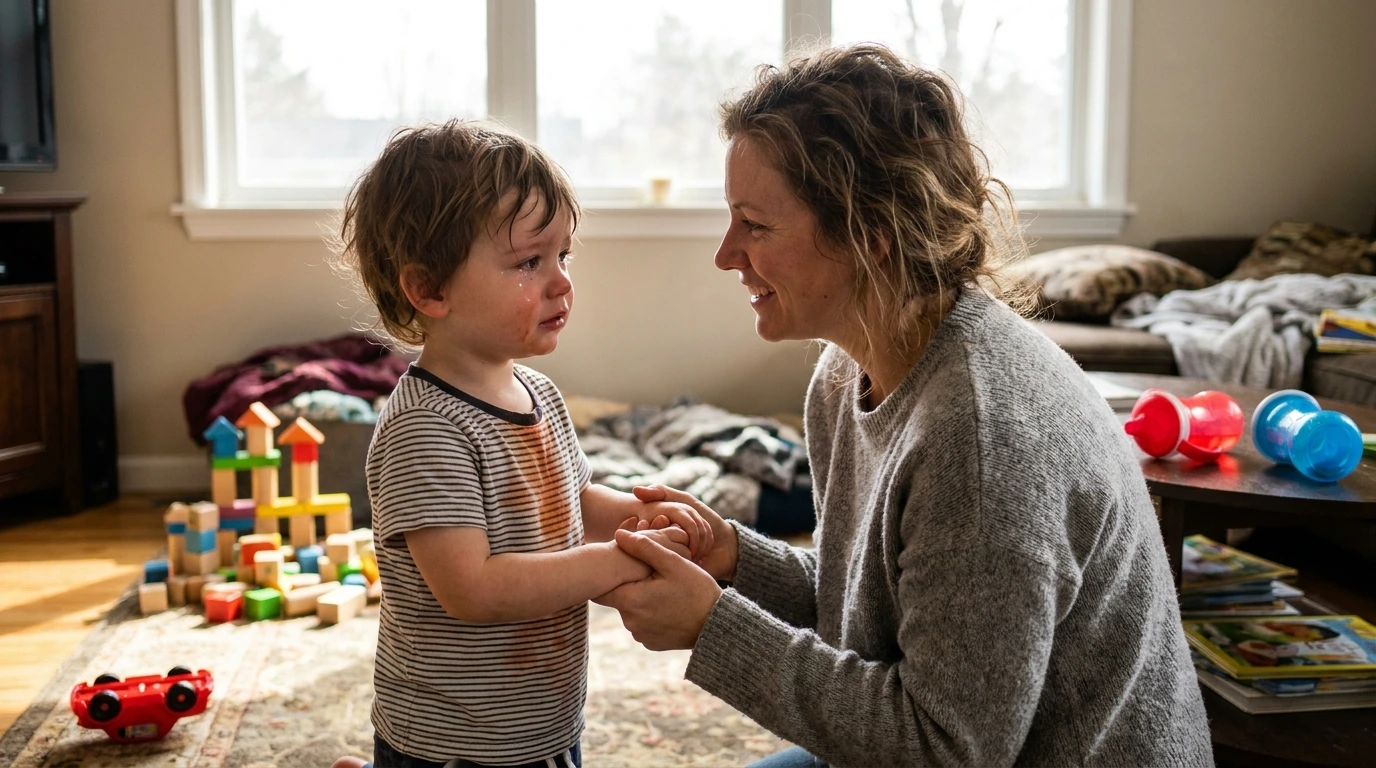
Every parent knows this nightmare. You are trying to get through a hectic afternoon. Out of nowhere, your toddler starts crying hysterically. Why? Because you put their juice in a blue cup instead of a red one. Your immediate instinct is just to stop the noise. Fast. Especially if you are out in public with everyone looking at you.
But here is the secret. Those exhausting, messy meltdowns are actually the best times to build your child’s emotional intelligence.
In early childhood psychology, people call this Emotion Coaching. It’s not a new internet trend. This idea from psychologist Dr. John Gottman just got backed up again by a 2025 study in the journal Affective Science. The reality is simple: when parents — especially moms — sit down and physically stay with their kids during big emotional moments in the early years, it changes things. It directly helps those kids master child emotional regulation as they grow up.
Why This Actually Matters for Your Kid
Let’s be honest. Dealing with endless crying drains your battery. But hanging in there and helping them navigate the mess pays off big time later. Researchers actually followed toddlers from age 3 all the way until they turned 15. The differences were huge. Kids who had emotional guidance at home grew up with serious advantages:
- Real mental toughness — When kids feel heard, they don’t stay mad for hours. They process the disappointment, shake it off, and move on.
- Easier friendships — Empathy becomes natural for them. Because they get their own feelings, making real friends and fitting in with classmates just happens easily.
- Fewer sick days — It sounds crazy, but managing stress keeps their immune system sharp. Emotionally balanced kids literally catch fewer colds.
- Better focus in class — A brain that isn’t carrying heavy, unsaid frustrations can actually focus on learning. They absorb school lessons way faster because their minds aren’t distracted by hidden stress.
How to Practice Emotion Coaching at Home (5 Steps)
Just to be clear: this isn’t about letting your kids do whatever they want. You are just giving them the words for their internal chaos. Next time you are figuring out how to deal with toddler tantrums, try this basic roadmap:
1. Catch the Moment
Don’t just view the crying as bad behavior you need to stop. Pause the dishes. Get down on the floor. Look them in the eye and just be there.
2. Validate the Mess
Stop saying things like, “It’s not a big deal, stop crying.” Try this instead: “I see you’re really upset because your block tower fell. That feels totally disappointing, doesn’t it?” It makes them feel safe.
3. Name the Feeling
Toddlers get overwhelmed by the physical rush of anger or sadness. They don’t have the words for it. Tell them what it is. Hearing the actual word for their frustration helps their nervous system calm down.
4. Set Boundaries on Actions
Empathy doesn’t mean you drop the rules. You can accept the anger but still stop them from throwing toys. Say something firm: “It’s okay to feel mad, but we don’t hit. Squeeze this cushion instead.”
5. Figure Out the Fix Later
Do not try to lecture them while they are still sobbing. Wait until the crying stops and their brain cools down. Once they are breathing normally, chat about how to handle that exact frustration better next time.
Aim for Connection, Not Perfection
Guiding a tiny human’s feelings takes a massive amount of energy. You will have rough days. Days where you are exhausted, the house is a total mess, and you lose your temper.
That is just part of the job. Don’t beat yourself up.
Raising an emotionally intelligent child is just about waking up and trying again tomorrow. Forget about being a perfect parent. Those small, awkward chats and tight hugs when they are crying are the exact things that prepare them for the real world.
Quick note: Send this over to your partner. It helps massively when both parents tackle these emotional hurdles together!